
Reviewed · STREET FOOD TOURS
Port Louis Street Food and Cultural Walking Tour
Port Louis is best understood with your appetite switched on. This small-group food walk links market stalls, leafy gardens, a historic mosque, and a UNESCO site, giving you a useful introduction to the capital beyond the beach resorts. I especially like the chance to taste faratas, samosas, and gateaux piment while learning how Mauritius became a meeting place for different peoples and cuisines.
I also like the compact route and the guide’s long professional background, which is used to add personal stories rather than just dates. The main drawback is the price: at $91.42 per person, it is not a cheap snack crawl, especially since the walk lasts only three and a half hours and hotel transfers are not included.
Key points to know before booking
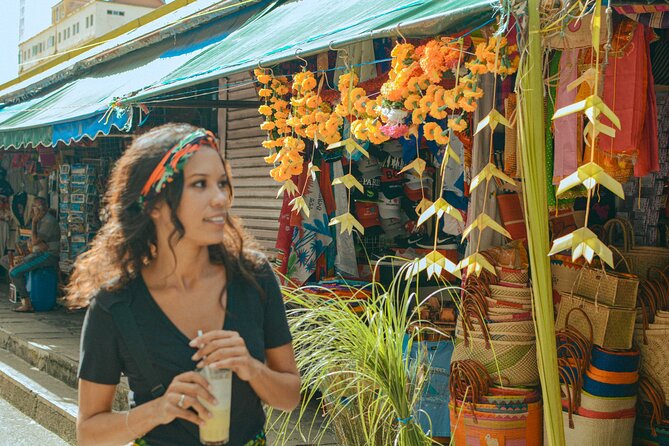
- Central Market sets the tone: Allow about 90 minutes for food stops and conversation in Port Louis’s main market.
- Mauritian staples are part of the route: You taste faratas, samosas, gateaux piment, and other selected street foods.
- Four distinct Port Louis stops: The walk connects the Central Market, Jardins de la Compagnie, Jummah Mosque, and Aapravasi Ghat.
- A very small group: The tour accepts a maximum of eight people, useful in crowded market lanes.
- A history lesson with food: The route explains Mauritius’s mixed cultural background and the beginning of the indentured labor diaspora.
- Plan your own arrival: You meet at the Central Post Office and return there at the end. Hotel pickup and drop-off are not provided.
Why this Port Louis walk is worth considering
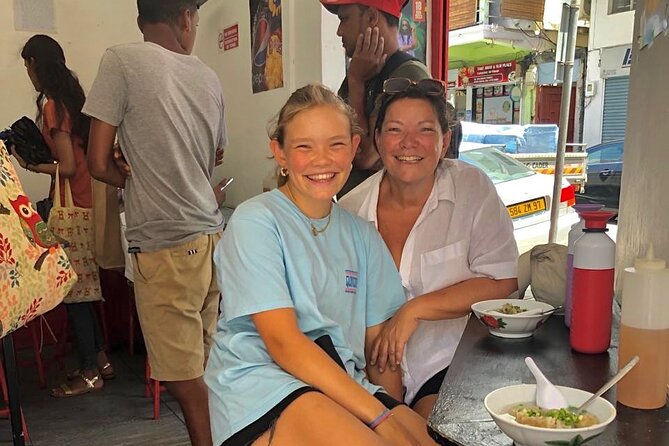
Many Mauritius holidays revolve around sand, lagoons, and hotel grounds. Port Louis offers something different: crowded streets, food counters, religious buildings, colonial-era traces, and daily life at close range. This tour puts those pieces together in one manageable outing.
The food is not treated as a side dish to sightseeing. It is the thread tying the route together. Faratas point toward the island’s Indian influence. Samosas and gateaux piment bring more familiar market flavors into the picture. At the Central Market, food becomes a way to discuss the people who shaped Mauritius and the habits that remain part of city life.
The group limit of eight matters here. Port Louis markets can be hard to navigate in a large party, and a small group makes it easier to hear the guide, stay together, and stop at food counters without creating a traffic jam. The published rating is 4.8 from five reviews, so the score is encouraging, but the sample is small. I would treat it as a good sign rather than a guarantee.
The guide brings 25 years of professional experience. No individual guide’s name is provided, but the description makes clear that this is intended to be a personal, story-led walk rather than a simple list of dishes. That can add real value if you enjoy context and conversation as much as eating.
More Food Tours in Port Louis
- Port Louis: Street Food & City Tour
★ 4.7 · 518 reviews - Port Louis: Street Food & City Tour
★ 4.9 · 377 reviews - Port-Louis Street Food Tour
★ 5.0 · 264 reviews
Meeting the guide at the Central Post Office
The tour begins in front of the Central Post Office on Trunk Road, at the listed location RGQ2+XJ9 in Port Louis. You should arrange your own way there because hotel pickup and return transport are not included.
The location is practical for a walking tour, since the route begins with the Central Market and ends back at the same meeting point. Still, give yourself enough time to arrive calmly. A late start would be awkward on a three-and-a-half-hour route, particularly with several food stops and historic places planned along the way.
The tour uses a mobile ticket, so you can keep the booking confirmation on your phone. Confirmation is normally sent when you book, though a reservation made within one day of departure is subject to availability and may take longer to confirm.
Central Market: 90 minutes of food and local life
The Central Market receives the longest portion of the outing, about an hour and a half. That is sensible. The market is where the tour’s food and cultural themes meet most directly.
You can expect to walk through a busy public market, stopping at selected places to try local snacks. The point is not simply to eat one famous item and move on. The route is designed to show how Port Louis’s food reflects the island’s mixed population, with the guide explaining the background as you go.
This is also the part of the tour where the group size has its greatest practical benefit. Eight people is still enough for conversation, but small enough to stay together around stalls and narrow passages. It should be easier to ask questions about what you are tasting instead of trying to keep up with a large crowd.
The food is included, along with bottled water. The precise number of tastings and portion sizes is not specified, so you should not assume this will replace a full meal. Think of it as a substantial sampling session. If you have a large appetite, you may still want to plan another meal later.
The market stop may appeal most to people who want a direct look at everyday Port Louis. It is less suited to anyone who prefers polished restaurants, quiet surroundings, or a tightly controlled tasting menu. Street food can be casual and changeable, which is part of its appeal but also part of the uncertainty.
Jardins de la Compagnie and the farata stop
After the market, the walk heads to Jardins de la Compagnie. The gardens are known for their large banyan trees, offering a change of pace after the market’s crowded setting.
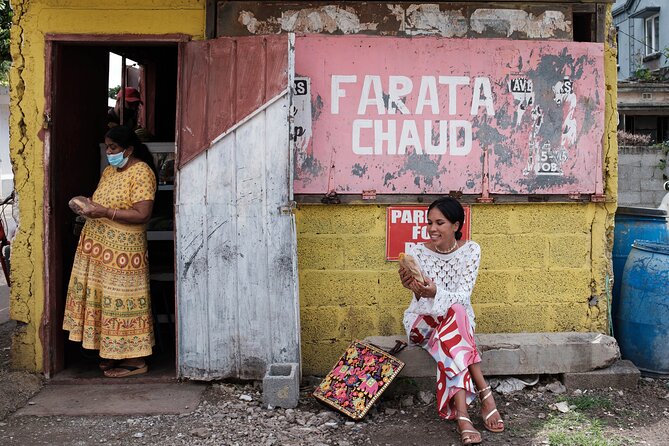
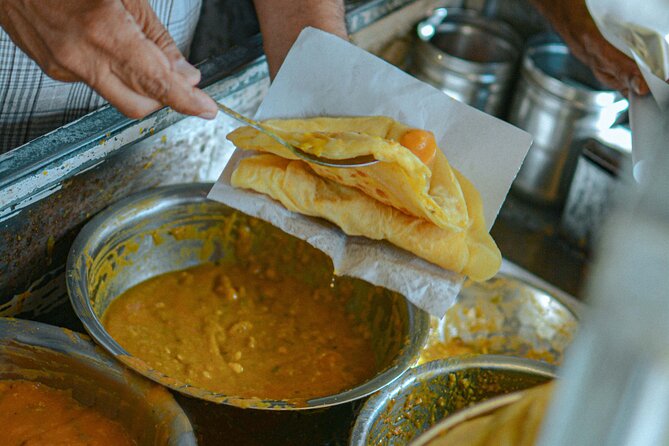
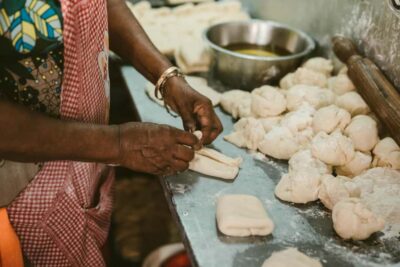
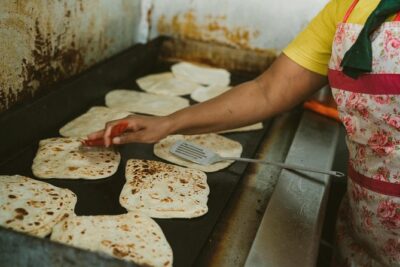
Here, the focus turns to faratas. Farata is one of the foods most closely associated with Mauritian street eating, and the tour presents it as a central tasting rather than an afterthought. The stop lasts about 45 minutes, giving the guide time to discuss the food and the setting without rushing you straight to the next landmark.
I like this section because it breaks up the outing. A food tour can become tiring if every stop involves standing in a crowded lane. The banyan trees provide a more open setting and give you a chance to eat at a slower pace.
The gardens are not presented as a major formal sightseeing attraction, and you should not book this tour expecting an extended botanical visit. Their value here is in the atmosphere and the contrast with the market. You get a shaded public space, a local snack, and more room for the guide’s stories.
More Food Tours in Mauritius:
- Mauritius: Port Louis Street Food Walking Tour
★ 4.5 · 93 reviews - Port Louis: Street Eats and City Highlights Walking Tour
★ 4.9 · 73 reviews - Mauritius: Snorkeling with Turtles & Port Louis Street Food
★ 4.4 · 61 reviews - Mahebourg Village Food Tour
★ 5.0 · 35 reviews
Jummah Mosque and two classic snacks
The next walk leads to Jummah Mosque, a religious building dating from the 1850s. The tour describes it as one of Mauritius’s most striking religious buildings, and the visit gives the route another layer beyond food.
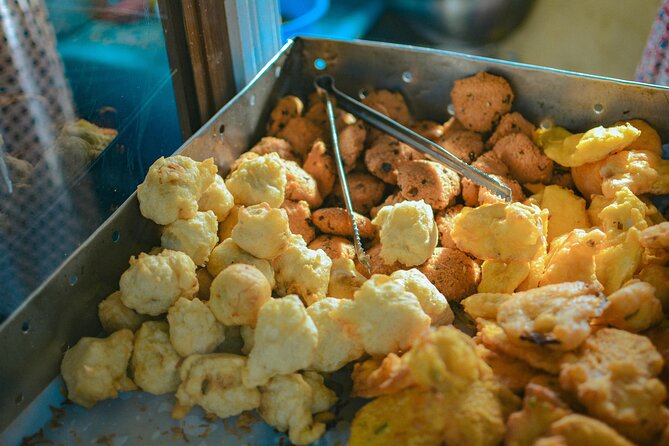
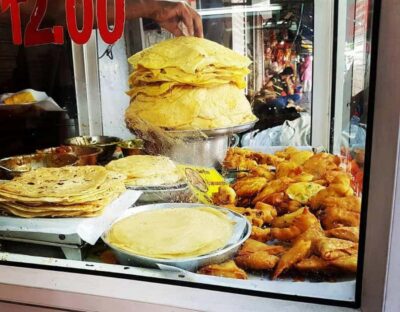
The mosque stop is paired with samosas and gateaux piment. Gateaux piment, literally chili cakes, are a familiar Mauritian snack made in a fritter style. The combination makes sense: you get a chance to taste more than one small item while learning about a major place of worship in the capital.
About 45 minutes is allocated here. That is enough time for an explanation and a snack stop, but it is not a lengthy architectural tour. The focus remains on the connection between food, faith, and the people who have shaped Mauritius.
You should remember that this is an active religious site. The supplied information does not specify a dress code or interior access, so do not assume every part of the building will be open for touring. Treat the mosque respectfully and follow the guide’s instructions on where to walk and when to pause.
This section may be especially useful if you want to understand Mauritius as more than a single cultural tradition. The tour brings together market food and religious heritage without pretending they are separate parts of the island’s identity.
Aapravasi Ghat and the story of indentured labor
The final major stop is Aapravasi Ghat, a UNESCO World Heritage Site. The remains here come from an Immigration Depot built in 1849, a place connected with the beginning of the modern indentured labor diaspora.
The visit lasts about 30 minutes. That is brief, but the subject is important. It gives the earlier food stops a wider historical frame, helping you understand why Mauritius has such a varied population and why Indian-influenced foods are so prominent in local life.
Aapravasi Ghat is not just another photo stop. It represents the arrival and movement of workers whose descendants became part of the social fabric of Mauritius. The guide’s role is particularly valuable here because the site can mean more when its human story is explained clearly.
Do not expect a long museum visit or a full afternoon at the site. The itinerary allows half an hour, so the experience is best seen as a focused introduction. If Aapravasi Ghat is a major interest for you, consider returning independently for more time.
How much food do you actually get?
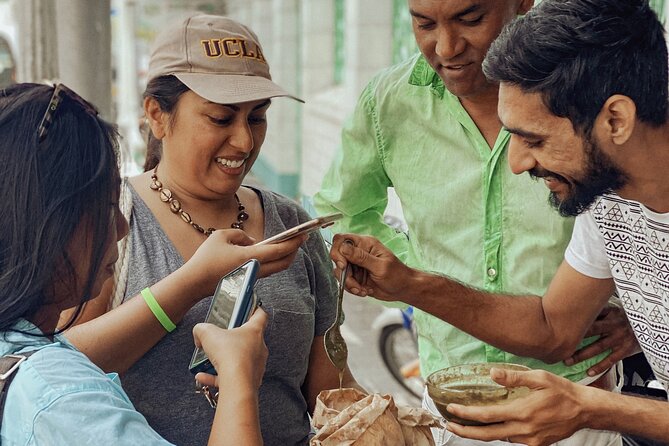
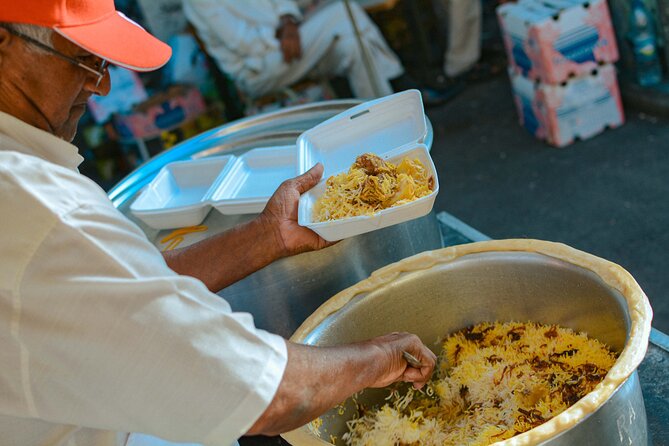
Street food tours vary widely. Some offer a few tastes, while others provide enough food for lunch. Here, the included items are described as selected street-food tastings, with faratas, samosas, and gateaux piment specifically noted. Bottled water is included as well.
Because the number and size of servings are not stated, I would plan for a food-focused snack session rather than a guaranteed full meal. The Central Market receives 90 minutes, followed by two 45-minute food and culture stops, so there should be several chances to eat. Still, bring realistic expectations.
The strength of this format is variety. You can sample several foods while learning what they represent. The weakness is that you have less control over the menu than you would in a restaurant. If you have allergies, dietary restrictions, or strong dislikes, ask about them before booking. The available details do not promise vegetarian, vegan, halal, gluten-free, or allergy-specific arrangements.
Is $91.42 good value?
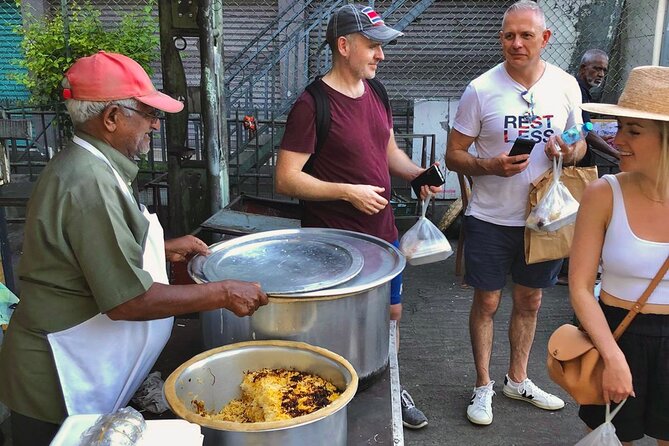
At $91.42 per person, this is a premium-priced walking tour. The ticket covers the local guide, bottled water, and street-food tastings, but not transport to the meeting point.
The value depends on what you want from Port Louis. If you only want to grab a few inexpensive snacks, the price will feel high. You are paying for more than the food itself: a small group, a planned route, explanations of Mauritius’s cultural background, and access to a guide with 25 years of professional experience.
The tour also saves you from having to identify food stalls, choose unfamiliar dishes, and work out a route between four different sites. That can be useful early in a Mauritius visit, when you are still learning how Port Louis works.
I would judge the price most favorably if you care about history and local context. If your priority is quantity, bargain eating, or independent exploration, you may find better value by visiting the market on your own. The tour makes more sense for someone who wants food and interpretation together.
Timing, walking, and group size
The total duration is approximately three hours and 30 minutes. The planned segments add up to the full length: 90 minutes at the Central Market, 45 minutes in Jardins de la Compagnie, 45 minutes at Jummah Mosque, and 30 minutes at Aapravasi Ghat.
You should be comfortable walking for several hours and standing at food stops. A moderate level of physical fitness is recommended. The tour does not mention stairs, steep slopes, or a specific distance, so the exact physical demand is not fully defined. Comfortable shoes are a sensible choice.
The group can contain no more than eight people. That is one of the strongest practical features of the experience. You are less likely to lose the guide in the market, and questions should be easier than on a large coach excursion.
The tour requires good weather. If poor weather causes cancellation, you are offered another date or a full refund. You can also cancel for a full refund up to 24 hours before the start time. Changes or cancellations made later are not accepted for a refund.
Who should book this experience?
I would recommend it to first-time visitors who want an introduction to Port Louis without spending a full day in the capital. It suits people who like to eat small portions, walk between sights, and ask questions about culture and history.
It is also a good fit if you are staying at a resort and want a sharper sense of life beyond the hotel area. The route gives you a compact look at markets, public gardens, religious architecture, and a major heritage site in one morning or afternoon.
Families with older children may appreciate the variety, though the food and walking format may be less suitable for very young children. People with limited mobility should ask for more details before booking, since the tour requires a moderate fitness level and does not provide hotel transport.
I would be more cautious about recommending it to foodies looking for exact ingredients, cooking demonstrations, or a set tasting menu. The available details promise street-food sampling, not a class or a restaurant-style meal. Anyone with serious dietary restrictions should confirm arrangements before paying.
Should you book the Port Louis Street Food and Cultural Walking Tour?
Book it if you want a compact, guided introduction to Mauritian food and culture, and if the $91.42 price fits your budget. The strongest reasons are the small group, the broad route, and the chance to connect everyday snacks with Mauritius’s complex past.
Skip it if you mainly want a cheap lunch, dislike crowded markets, or prefer to explore Port Louis at your own speed. The short duration also means each historic stop is an introduction rather than an exhaustive visit.
For most visitors, I would place this tour early in a Mauritius stay. It can help you recognize local foods, understand the capital’s layout, and decide which sites deserve a longer return visit.
FAQ
Where does the Port Louis food tour begin?
It begins in front of the Central Post Office on Trunk Road in Port Louis, Mauritius. The listed location is RGQ2+XJ9.
Where does the tour end?
The activity ends back at the original meeting point near the Central Post Office.
How long does the tour last?
The tour lasts approximately three hours and 30 minutes.
What food is included?
Included street-food tastings feature faratas, samosas, and gateaux piment. Bottled water is also included.
Are hotel pickup and drop-off included?
No. You must make your own way to the Central Post Office, and the tour returns there after the walk.
How many people can join the tour?
The maximum group size is eight people.
What fitness level is needed?
A moderate level of physical fitness is recommended. You should be comfortable walking and standing during the three-and-a-half-hour experience.
What happens if the weather is poor?
The experience requires good weather. If it is canceled because of poor weather, you will be offered a different date or a full refund.
More Walking Tours in Mauritius
- Mesmerizing Ile aux Cerf: Speed Boat, GRSE, Lunch & Undersea walk (Full Day)
★ 4.0 · 22 reviews - Grand Baie: Guided Walking Food Tour
★ 4.9 · 20 reviews - Walking under the sea in Mauritius with transfer
★ 3.4 · 7 reviews - Grand Baie: Coastal Cuisine & Culture Walking Tour
★ 4.7 · 3 reviews
Just added around Mauritius
- Mauritius: Watersport Adventure Day with Lunch and Pickup★ 3.9 · 3 reviews
- Whale & Dolphins Swimming – Private Speedboat Exclusive Tour★ 4.2 · 3 reviews
- Tea Route: Lake, Forest, Tea Plantation & 3 Course Lunch★ 3.6 · 7 reviews
- Black River: Guided Hike in the Black River Gorges Valley★ 4.0 · 6 reviews
- Walking under the sea in Mauritius with transfer★ 3.4 · 7 reviews
- Île aux Cerfs: Private Catamaran Cruise with Gourmet Lunch★ 5.0 · 10 reviews
- Mauritius: Private Full Day Tour with Entry Tickets & Lunch★ 4.4 · 12 reviews
- Vallé Advenature Park, Discovery Quad single 1hr★ 4.7 · 12 reviews
Street Food Tours, compared.



Browse the lists this tour appears in