
Reviewed · PORT LOUIS TOURS
ROUTE OF INDIAN SPIRITUALITY
The most interesting part of this tour is the way it links temple worship to Mauritius itself. In three stops, you move from the first Maha Shivaratree pilgrimage site in Mauritius to Tamil temples at Cap Malheureux, while Eric explains gods, legends, festivals, slavery, and modern island life.
I like the small private format, which lets you ask direct questions. I also like the sharp focus on real symbols, such as Shiva’s blue neck, the constantly watered lingam, and Ganesh’s broken right tusk. The main consideration is pace: three hours covers a lot, so this is an introduction rather than a full study of Mauritian religion.
Key points to know
- Triolet Temple marks a 1898 pilgrimage beginning: The first stop connects today’s Maha Shivaratree observance with an important moment in Mauritius.
- Two Cap Malheureux kovils show Tamil traditions: You visit one temple for its stories and legends, then another for its huge Muruga statue.
- Eric provides the personal guide: His explanations cover both religious meaning and the wider story of Mauritius.
- The tour is private for your group: You are not folded into a large coach party, and questions can shape the visit.
- Festivals are part of the wider picture: Maha Shivaratree, Cavadee, Ganesh Chaturti, Ganga Snan, and Govinden all receive attention.
- The price is $64.61 per person: For three hours of private guiding, the value depends on how much context you want rather than on the number of sights.
Why this temple tour offers more than sightseeing
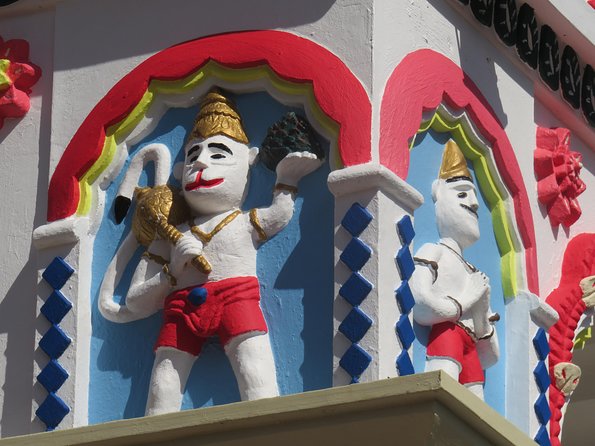
Mauritius can look like a beach-and-resort destination until you begin asking how its communities formed. Indian spirituality is a major part of that story, and this tour gives you a practical way into it without assuming you already know Hindu or Tamil traditions.
The approach is playful, but it is also respectful. You are not simply taken to three buildings for photographs. You are encouraged to ask why particular gods look the way they do, what certain rituals mean, and how worship connects with public festivals and community life.
That makes the experience useful for you if religious sites often seem hard to read. A statue, a lingam, or a festival procession can feel mysterious when you do not know the story behind it. Here, the explanation is the point.
The tour also asks a useful question: how distant are these traditions from everyday life in Mauritius, and how close might they be to values you already recognize? The discussion reaches beyond theology into society, memory, slavery, and present-day commitment. That wider frame gives the temples more meaning.
A few more Port Louis half-days to weigh up
- Port Louis: Street Food & City Tour
★ 4.7 · 518 reviews - Port Louis: Street Food & City Tour
★ 4.9 · 377 reviews - Port Louis: Mont Choisy, Botanical Garden, and Church Tour
★ 4.7 · 268 reviews
Starting at La Croisette in Grand Baie
You meet at La Croisette, on Chemin Vingt Pieds in Grand Baie, at 9:00 in the morning. The activity returns to this same meeting point, and the total duration is about three hours.
That timing suits a morning of sightseeing. You have a fixed start rather than a vague pickup window, and the return point is clear. If you are staying around Grand Baie, it also gives you the rest of the day for another activity or a quiet afternoon.
The tour uses a mobile ticket, which keeps the booking simple. It is a private activity, so only your group takes part. That matters here because religious questions rarely follow a script. You can pause over a symbol that puzzles you instead of waiting for a large group to move on.
The experience is listed at $64.61 per person. I see that as a fair price if you want a guide to interpret the sites and connect them to Mauritian culture. It is less compelling if you only want quick temple visits and photographs, since admission to the temples is free.
The value is in Eric’s time, explanations, and the private setting. A high-quality guide can turn a short visit into something you remember. A weak explanation would leave you with three names and a few pictures, so the guide is central to what you are paying for.
Triolet Temple and the 1898 pilgrimage
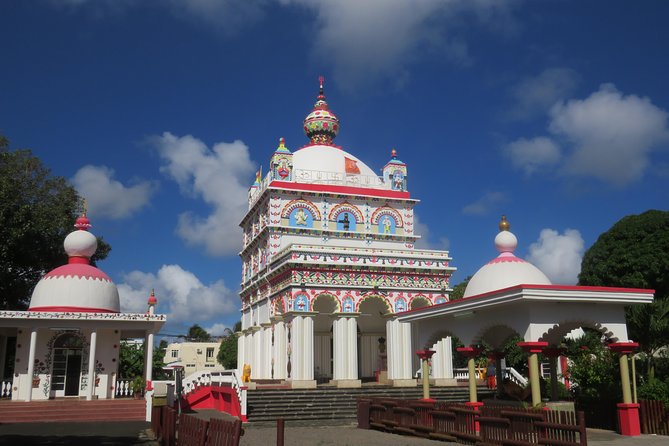
The first stop is the temple at Triolet, where you spend about an hour. Its special importance comes from its connection to the first Maha Shivaratree pilgrimage in Mauritius, held in 1898.
That date gives you a firm historical anchor. Maha Shivaratree is not just a colorful religious event on a calendar. It represents an established tradition of pilgrimage and devotion, and Triolet helps show how that tradition took root on the island.
This longer stop gives Eric room to explain Shiva and the symbols associated with him. You may hear why Shiva has a blue neck and why a lingam should be continually watered. These are the kinds of questions that make a temple visit more rewarding because they connect what you see with the beliefs behind it.
The tour also covers the relationship between Hindu religion and Tamil religion. That distinction matters. Mauritius is home to related but separate traditions, and the experience does not flatten them into one simple category.
You should expect a lesson in context rather than a formal religious service. The supplied details do not promise that you will attend prayers at Triolet on every departure. The wider program can include following processions or prayers on specific festival dates, but that depends on when you visit.
First Cap Malheureux kovil: stories, legends, and place
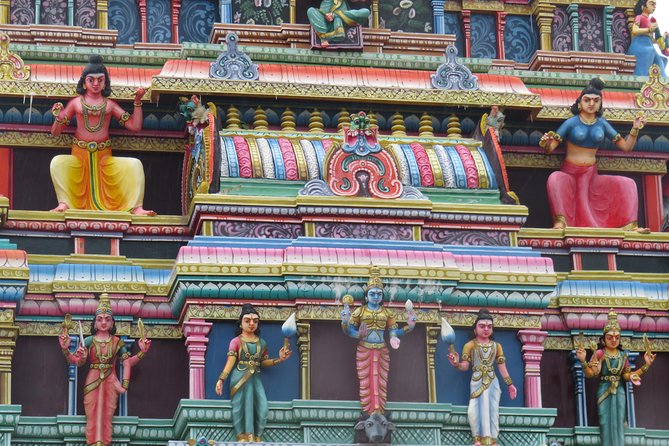
The second stop takes you to a Tamil temple, or kovil, at Cap Malheureux. This visit lasts about 30 minutes and focuses on description, history, legends, and myths.
The shorter time works well as a change of angle. After learning about a major Hindu pilgrimage connection at Triolet, you see a Tamil place of worship and hear how its own stories shape the site. You are given a chance to compare traditions rather than treating every temple as interchangeable.
Cap Malheureux is also useful in practical terms because two temple visits happen in the same area. You do not spend the whole experience crossing Mauritius. Instead, the time goes toward explanation and observation.
Thirty minutes is enough for a focused introduction, but it is not a long period for quiet reflection. If you prefer to linger over architecture, decoration, or worship practices, you may find this stop brisk. The tour’s purpose is to give you a readable overview of several traditions in one morning.
Eric’s role is especially important here. The legends and myths are not always obvious from what you see. Clear storytelling can help you understand why a temple matters to the people who use it, not just how it appears to an outsider.
Same lagoon, a completely different day out:
- Port-Louis Street Food Tour
★ 5.0 · 264 reviews - Port Louis Market, Botanical Garden -Northern Mauritius Tour
★ 4.6 · 164 reviews - Mauritius: Port Louis and Northern Highlights Full-Day Trip
★ 4.3 · 161 reviews - Mauritius: Port Louis Street Food Walking Tour
★ 4.5 · 93 reviews
The 15-meter Muruga statue
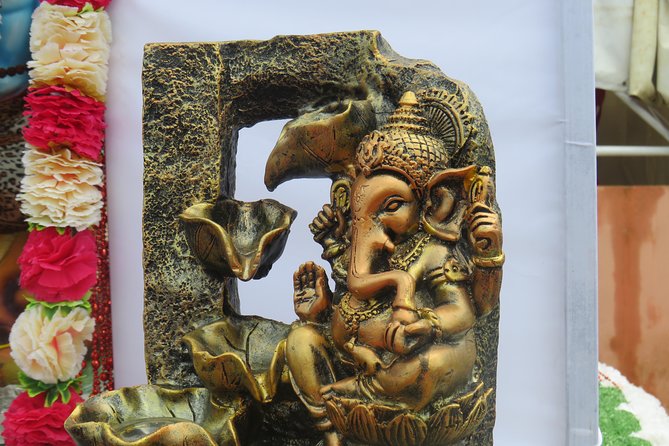
The third stop is another Tamil temple at Cap Malheureux, where you see an imposing statue of Muruga standing 15 meters high. It is a replica of the statue at the entrance to the Batu Caves in Kuala Lumpur.
You spend about 15 minutes here, so this is the quickest stop. Its appeal is immediate: the statue gives you a strong visual finish and a clear connection between Tamil religious expression in Mauritius and a famous site in Malaysia.
Muruga is one of the key figures in Tamil worship, and the statue provides a prompt for further explanation. You can ask about the deity, the meaning of the image, and the place of Tamil temples within Mauritian society.
Do not expect a long museum-style visit. The stop is built around seeing the statue and understanding its significance. If you enjoy grand religious imagery, it will likely be one of the morning’s memorable moments. If you want detailed architectural study, 15 minutes may feel short.
Together, the two Cap Malheureux temples balance one another. The first leans toward stories and local tradition. The second gives you a large, recognizable image that links Mauritius with the wider Tamil world.
Festivals that help explain Mauritian life
A strong feature of this experience is its attention to festivals. The program raises Maha Shivaratree, Cavadee, Ganesh Chaturti, Ganga Snan, and Govinden, asking what each celebration means rather than presenting them as a list of exotic names.
That matters because festivals show religion in public life. They bring ritual, family, music, movement, and community participation together. Even if your visit does not fall during a festival, learning about these events helps you understand what you may see elsewhere in Mauritius.
The experience can also include attending or following processions and prayers on specific festival dates. This is date-dependent, so you should not book the morning assuming a procession will always be part of it. The core activity is the temple tour and guided discussion.
You will also hear about the difference between religious labels and lived identity. The question of Hindu religion versus Tamil religion is not treated as a simple either-or choice. That makes the conversation more useful, especially if you want to understand how communities preserve distinct practices while sharing the same island.
Slavery, memory, and Mauritius today
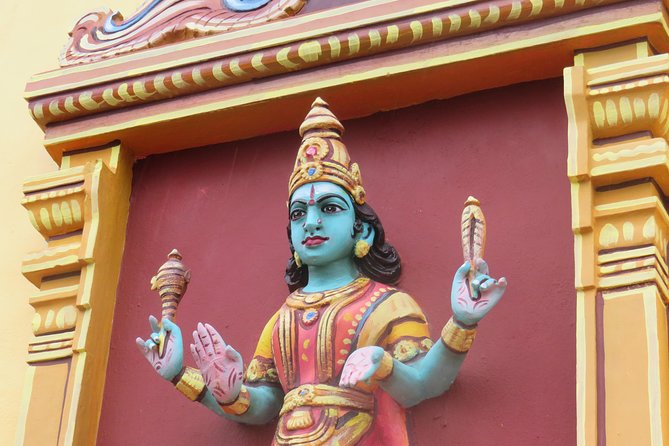
The tour does not stop at mythology. It also addresses slavery and the commitment of Mauritian communities in the present day.
That wider history is important. Temples are not isolated monuments. They are connected to migration, labor, family, belief, and the way people built a society under difficult conditions. The mention of slavery signals that this experience takes Mauritius seriously as a place with a complicated past, not merely as a tropical holiday setting.
You should keep your expectations measured. The tour lasts about three hours and visits three temples, so it cannot provide a full course in Mauritian social history. Still, even a short discussion can change the way you understand the island’s religious buildings and festivals.
I particularly like this balance. The tour invites curiosity about gods and legends, but it also asks what these traditions mean for people now. That combination keeps the experience from becoming a collection of disconnected stories.
Who will get the most from this experience?
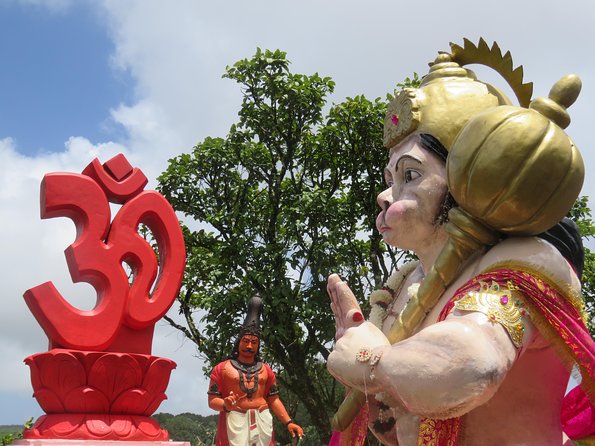
I would choose this tour if you want cultural context and prefer to ask questions in a small group. It should suit couples, families, and friends who want more than a quick look at religious buildings.
It is also a good match if you are curious about symbolism. The questions about Shiva’s blue neck, the watered lingam, and Ganesh’s broken right tusk give you a sense of the tour’s style. You are encouraged to wonder aloud, then connect the answer to a larger story.
You may want to skip it if your priority is a long, quiet visit at one temple. The morning is designed to cover three places, with the stops lasting one hour, 30 minutes, and 15 minutes. Its strength is range and interpretation, not extended time at a single site.
Most people can participate, and service animals are allowed. The meeting point is near public transportation. The tour requires good weather, and if poor weather forces cancellation, you are offered another date or a full refund.
You can cancel for a full refund up to 24 hours before the start time. Changes or cancellations made less than 24 hours before the start are not accepted for a refund.
Should you book the Route of Indian Spirituality?
Book it if you want to understand why temples, pilgrimages, and festivals matter in Mauritius. The private format, Eric’s personal guidance, and the mix of Hindu and Tamil sites give you more substance than a quick photo stop.
The strongest reason to go is the connection between small details and big questions. A broken tusk or a blue throat becomes a doorway into belief, history, and daily life. The main limitation is the short schedule, especially at the final temple.
At $64.61 per person, I consider it good value for a private three-hour introduction, particularly if you are staying in Grand Baie and want a morning activity with cultural depth. Choose it for explanation and conversation, not for a long list of attractions.
FAQ
Where does the tour begin?
It begins at La CroisetteMU, Chem. Vingt Pieds, Grand Baie 30517, Mauritius.
What time does the tour start?
The scheduled start time is 9:00 am.
Where does the tour end?
The activity ends back at the meeting point at La CroisetteMU.
How long does the experience last?
The tour lasts approximately three hours.
How much does the tour cost?
The listed price is $64.61 per person.
Is the tour private?
Yes. Only your group participates in this private activity.
What temples are included?
You visit the temple at Triolet, then two Tamil temples, or kovils, at Cap Malheureux.
Is admission to the temples included?
Admission tickets are free at the listed stops.
Can I use a mobile ticket?
Yes. The experience includes a mobile ticket.
What happens if bad weather cancels the tour?
You are offered a different date or a full refund if the experience is canceled because of poor weather.
Just added around Port Louis
- Northern Mauritius Private Tour w/ Port louis Market and Beaches★ 4.5 · 4 reviews
- Full Day-Port-Louis Cultural Tour★ 3.5 · 7 reviews
- Mauritius Hiking : Tamarind falls ( 7 waterfalls)★ 5.0 · 6 reviews
- Private Full Day Tour in Mauritius★ 4.5 · 8 reviews
- >>TAXI ONLY<< to la vallée des couleurs OR CASELA.★ 5.0 · 9 reviews
- Mauritian Culinary Experience – Full Day with Lunch★ 4.5 · 4 reviews
- 1 way Airport transfer★ 4.0 · 3 reviews
- Private Airport/hotel Transfers★ 5.0 · 13 reviews
Port Louis Tours, compared.
Port Louis Market, Botanical Garden -Northern Mauritius Tour
Read our review →
Port Louis and Northern Highlights Full-Day Trip
Read our review →
Private Full Day Tour of Port Louis and Northern
Read our review →Browse the lists this tour appears in