

Reviewed · TICKETS
Entrance Ticket to World of Seashells museum
The World of Seashells in Chamarel turns a simple shell collection into a lesson in biology, culture, mathematics, and human history. Its 8,000 specimens come from around the world, and the displays explain how shells grow, protect their owners, and became symbols in myths and religions.
I like the beautiful range of colors and shapes, and I like that the museum explains more than names and origins. You can learn about shell structure, environmental roles, traditional uses, and the shell theorem behind those perfect spirals. The main drawback is that the subject rewards patience. If you lose interest quickly, several thousand shells may feel like a lot to take in.
Key points about the World of Seashells
- 8,000 shells from around the world: The museum presents what is described as Africa’s largest seashell collection.
- More than a display of pretty objects: You learn about shell anatomy, living mechanisms, defense systems, and the role of shells in the environment.
- Strong cultural element: Exhibits cover how people used shells over the centuries, along with myths and legends tied to the origin of life.
- A gentle introduction to mathematics: The shell theorem helps explain the natural spiral curves found in many shells.
- A good family stop: Children can look closely at unusual forms and colors while learning without a long, demanding tour.
- Allow flexible time: The stated visit lasts about 45 minutes to 1 hour 30 minutes, though a quick look can take closer to 20 or 30 minutes.
Entering Chamarel’s largest shell collection
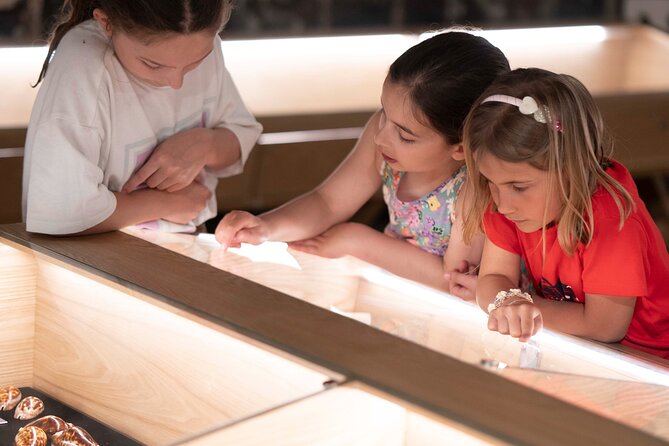
Chamarel is known for nature-focused stops, and the World of Seashells gives you a different way to look at the island. Instead of heading straight for a viewpoint or geological attraction, you spend time with objects shaped by the sea and collected from many parts of the world.
The collection contains about 8,000 seashells. That number matters because the experience is not built around a few large or unusual specimens. You get a broad look at the great variety of shell forms, from familiar beach finds to shapes you may never have seen before.
The displays are intended to help you compare shells rather than simply admire them. You can look at changes in size, color, pattern, and structure, then connect those differences to the animals that made them.
I find that approach useful for families. Children often notice the bright colors and strange outlines first. Adults can read the explanations and understand why a shell has a particular shape or surface. Everyone has something to examine, even if not everyone wants to read every panel.
A few more Chamarel half-days to weigh up
- North Day Tour, Botanical Garden, Sugar Museum, Rum Tasting
★ 5.0 · 3 reviews
What the shell displays explain
The museum focuses on the shell as a living part of an animal, not as a lifeless beach souvenir. You learn about morphology, which means the form and structure of the shell, as well as the way it develops and functions.
The displays cover living mechanisms and defense systems. In plain terms, you get an explanation of how shells help their inhabitants survive. This gives the collection a practical purpose. You are not just looking at decorative patterns. You are seeing the result of natural protection and growth.
The shell’s perfect-looking curves receive special attention. The shell theorem helps explain the mathematical basis behind spiral forms. You do not need a strong background in mathematics to appreciate this section. It simply gives you another way to understand why many shells appear so carefully designed.
The best way to approach the museum is to slow down at a few examples. Look at the curve, the opening, the ridges, and the surface pattern. Then read how those features may help the animal. That small shift in perspective makes the collection more interesting.
Colors, patterns, and the pleasure of looking closely
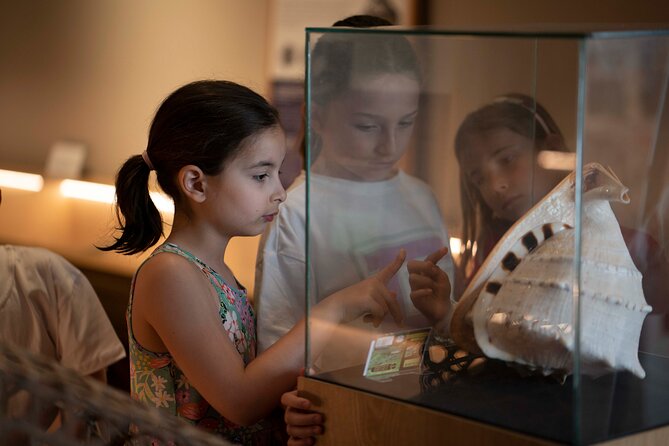
The visual appeal is immediate. Shells can be smooth, ridged, striped, spotted, glossy, pale, or boldly colored. The museum presents them in a way that lets you compare those details rather than seeing them as a jumble of beach objects.
If you enjoy collecting shells, this is likely to be the strongest part of the visit. The collection gives you a chance to see varieties from different countries in one place. You can examine forms that would be difficult to find on a single beach, or even on one island.
I also like the fact that the displays connect beauty with function. A spiral is not simply attractive. A pattern may help camouflage an animal, while a thick surface or pointed shape may provide protection. The museum encourages you to ask why the shell looks the way it does.
There is a limit to this kind of attraction. Several thousand specimens can feel repetitive if you rush from case to case. Give yourself permission to read only the sections that interest you most. A short visit still works, but the museum rewards a slower pace.
Shells in myths, religion, and daily life
The visit moves beyond natural science into human culture. Shells have been used by people across the world for centuries, and the museum explains some of those uses.
The exhibits also explore myths and legends that connect the shell with the origin of life. That theme gives the collection a wider meaning. Across different societies, the shell has represented birth, the sea, fertility, protection, and the mystery of creation.
This part may appeal most to adults who enjoy cultural context. It also gives parents an easy way to start a conversation with children. Ask what a shell might represent, why people carried or displayed shells, or how an object from the sea could become part of a story about life.
The information makes the visit feel less like a collection room and more like a small museum about the relationship between people and the ocean. Still, the experience remains self-guided based on the information provided. Do not expect a scheduled talk or a named guide. The material on display does the teaching.
Same lagoon, a completely different day out:
- Mauritius: Private Southwest Chamarel Highlights Tour
★ 4.8 · 1,427 reviews - Mauritius: Chamarel 7 Colours & Waterfalls, South-West Tour
★ 4.6 · 287 reviews - Riambel: South Tour w/ Crocodile Park & Seven Colored Earth
★ 4.5 · 204 reviews - Ebony Forest Reserve Chamarel – Take a Hike Tour
★ 5.0 · 103 reviews
A useful stop for families with children
The museum is specifically suited to children because the subject is easy to approach visually. Young visitors can begin with the simplest task: finding the strangest shape or favorite color. From there, the displays can introduce ideas about animals, protection, growth, and the sea.
The visit is also manageable in length. The stated duration is about 45 minutes to 1 hour 30 minutes, but a focused look may take only 20 to 30 minutes. That flexibility helps if you are fitting the museum into a larger day in Chamarel.
Parents should know that this is not an amusement attraction. There are no rides or hands-on activities described. Children who enjoy looking, comparing, and asking questions should do well. Children who need constant movement may find the room slow after the first section.
I would plan a simple family challenge: choose three shells with different patterns and decide what makes each one unusual. Then look for the explanation of how shells protect their animals. It turns the visit into an active search without requiring extra equipment.
How long should you allow?
Your timing depends on how much you read. A quick circuit can take around 20 to 30 minutes. That is enough to see the main collection and decide which displays catch your attention.
For a more careful visit, allow 45 minutes to 1 hour. You can inspect the major groups, read the information about shell biology, and spend time on cultural stories and the shell theorem.
The full suggested window reaches 1 hour 30 minutes. That suits a visitor who enjoys natural history museums and wants to examine many examples closely. You should not feel obliged to stay that long if the main collection has answered your questions.
A practical point: one reported Sunday visit found the doors closed at 2:40 pm, despite a stated last entry of 3 pm. That may have been a one-off problem, but I would avoid arriving close to closing time. Start at 9:00 am if that fits your plans, or confirm the day’s opening and last-entry times before setting out.
Is the $7 admission good value?
At $7 per person, the museum is a modest-cost stop, especially if you already plan to visit Chamarel. The value comes from the size of the collection and the amount of explanation attached to it, not from the length of a guided program.
You are paying for access to 8,000 shells, information about their biology, and a look at their cultural and mathematical meaning. If you like the sea, natural history, photography, or collecting, that is a fair exchange for less than an hour or two of your day.
The value is less certain if you are only interested in major outdoor scenery. This is an indoor museum visit, and its appeal depends on your willingness to examine objects in cases and read descriptions.
I would call it a good add-on rather than a full-day attraction. At $7, it does not need to carry the whole day. Pair it with another Chamarel stop, and the price feels easier to justify.
Practical planning for your visit
The ticket is mobile, so you can keep the booking on your phone rather than arranging a printed voucher. Confirmation is provided when you book, and the experience is often booked about five days ahead.
The listed start time is 9:00 am. The available information does not give a full daily timetable, so check the operating details for your chosen date. Because of the reported early-closing problem, arriving with plenty of time is the safer choice.
The museum is near public transportation, which helps if you are not driving. Specific routes, journey times, and parking details are not provided, so you should check the transport option that fits your base in Mauritius.
Service animals are allowed, and most people can take part. The experience requires good weather. If poor weather causes cancellation, you can receive a different date or a full refund.
You can cancel for a full refund up to 24 hours before the start time. Changes or cancellations made less than 24 hours before the experience are not accepted for a refund.
Who will enjoy this museum most?
I would recommend it first to anyone who enjoys shells, marine life, natural history, or small museums with a clear subject. The collection gives you far more variety than you are likely to see during a casual walk along one beach.
It also suits families who want a short educational stop. The colors and unusual shapes offer an easy entry point for children, while the explanations give adults enough substance to make the visit worthwhile.
It may appeal to you if you enjoy cultural connections. The sections on myths, legends, and the use of shells by people around the world add depth beyond simple identification.
I would be more cautious if you dislike displays that require reading or close observation. The museum does not appear to offer a fast-moving performance or an outdoor activity. Its pleasure comes from looking carefully and making connections.
What could be improved?
The biggest practical concern is opening-time reliability. Arriving before the last entry is important, and I would not plan to reach the door just before closing. The account of an early closure is too specific to ignore, even though it may not reflect normal operation.
The other concern is attention span. A collection of 8,000 shells can be fascinating, but it can also become visually repetitive. Your experience will be better if you choose a few themes, such as spiral forms, defense systems, cultural uses, or environmental importance, rather than trying to inspect every shell.
The available information does not name a guide or describe a guided tour. You should expect to learn from the displays at your own pace. That is convenient for some people, but visitors seeking live storytelling may find the format less personal.
Should you book the World of Seashells?
Book it if you are already visiting Chamarel and want a short, affordable stop with more substance than a simple souvenir display. The 8,000-shell collection, explanations of biology, and links to culture and mathematics make it a useful change of pace from outdoor sights.
Families, shell collectors, and anyone curious about the sea are the best match. At $7, the risk is low, and the visit can be brief if it does not hold your attention.
Skip it if you want an active attraction or if you know that rows of displayed objects will test your patience. If you do go, arrive well before the expected closing time and allow at least 30 minutes, with up to 90 minutes if you enjoy reading and comparing specimens.
FAQ
Where is the World of Seashells museum?
The museum is in Chamarel, Mauritius.
How many seashells are in the collection?
The museum presents about 8,000 seashells from around the world.
Is this the largest seashell collection in Africa?
It is presented as the largest seashell collection in Africa.
How much does admission cost?
The entrance ticket costs $7 per person.
How long does a visit take?
The expected visit lasts about 45 minutes to 1 hour 30 minutes. A shorter visit of around 20 to 30 minutes may be enough if you only make a quick circuit.
What can I learn at the museum?
You can learn about shell morphology, living mechanisms, defense systems, natural patterns, colors, cultural uses, myths, legends, and the mathematical basis of spiral curves through the shell theorem.
Is the museum suitable for children?
Yes. The experience is described as especially appealing to children, and most people can participate.
Is the ticket mobile?
Yes. The experience includes a mobile ticket.
Is the museum accessible by public transportation?
The museum is near public transportation. Specific routes are not provided.
Can I cancel my ticket for a refund?
Yes. You can cancel at least 24 hours before the experience start time for a full refund. Cancellations or changes made less than 24 hours before the start time are not accepted for a refund.
Just added around Chamarel
- Southern Treasures: Bois Cherri Tea Factory & 23-Colored Earth★ 4.5 · 9 reviews
- Ebony Forest Reserve Chamarel: Sublime Sundowner★ 4.5 · 9 reviews
- Full day visit to Chamarel ,Curious Corner & Takamaka with Lunch★ 4.5 · 5 reviews
- Taxi Mauritius Airport Transfers★ 5.0 · 11 reviews
- Fascinating Nature Tour Incl Ebony Forest, 7 Coloured Earth,Lunch★ 5.0 · 3 reviews
- South: Gorges, Waterfalls, Lakes, Trails, 23 Coloured Earth★ 4.3 · 13 reviews
- South of Mauritius : Full day Private with lunch & Chamarel★ 4.9 · 9 reviews
- From Chamarel: Waterfall Eco-Hike Adventure★ 4.8 · 11 reviews
Tickets, compared.

Ticket to the largest Oceanarium of the Mascarene Islands
Read our review →
Casela Nature Parks Entrance Ticket with Transfer
Read our review →

Browse the lists this tour appears in